What is Lung Cancer Evaluation?
Lung cancer is the uncontrolled growth of abnormal cells in the lung. It is one of the most common cancers worldwide. Outcomes depend greatly on the type of cancer and how early it is detected.
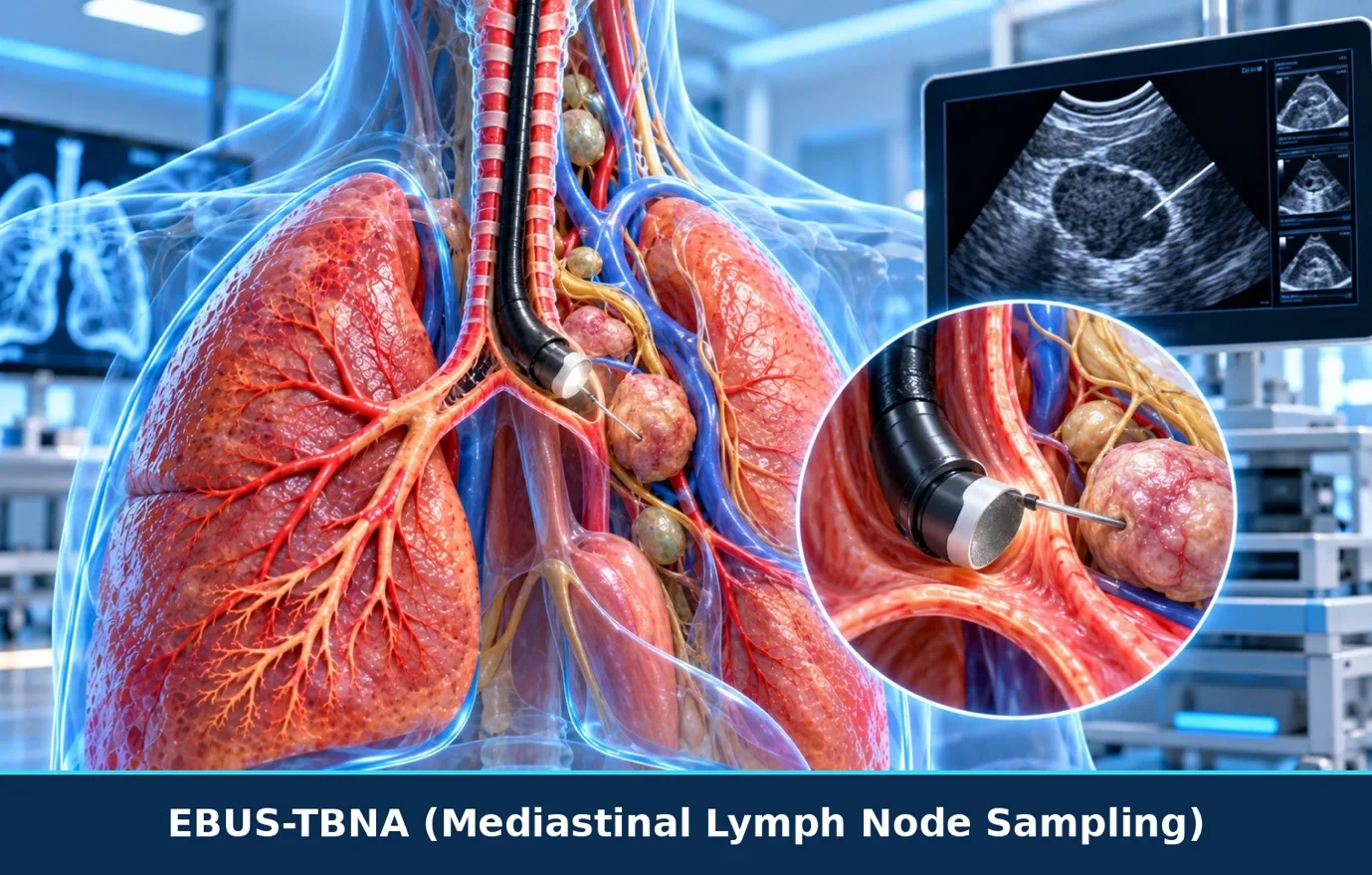
The role of the interventional pulmonologist is to obtain an accurate tissue diagnosis — often using minimally invasive bronchoscopy and EBUS-TBNA — and to help stage the disease, so that the oncology team can plan the most appropriate treatment.
Common symptoms
- A cough that does not go away or a change in a long-standing cough
- Coughing up blood
- Chest pain
- Unexplained weight loss and fatigue
- Breathlessness or a hoarse voice
- Recurrent chest infections in the same area
Possible causes & risk factors
- Tobacco smoking — the most important risk factor
- Second-hand smoke
- Air pollution and radon exposure
- Occupational exposures such as asbestos
- Family history and previous lung disease
When should you consult a pulmonologist?
- Any of the above symptoms, particularly in current or former smokers
- A mass, nodule or enlarged lymph nodes reported on imaging
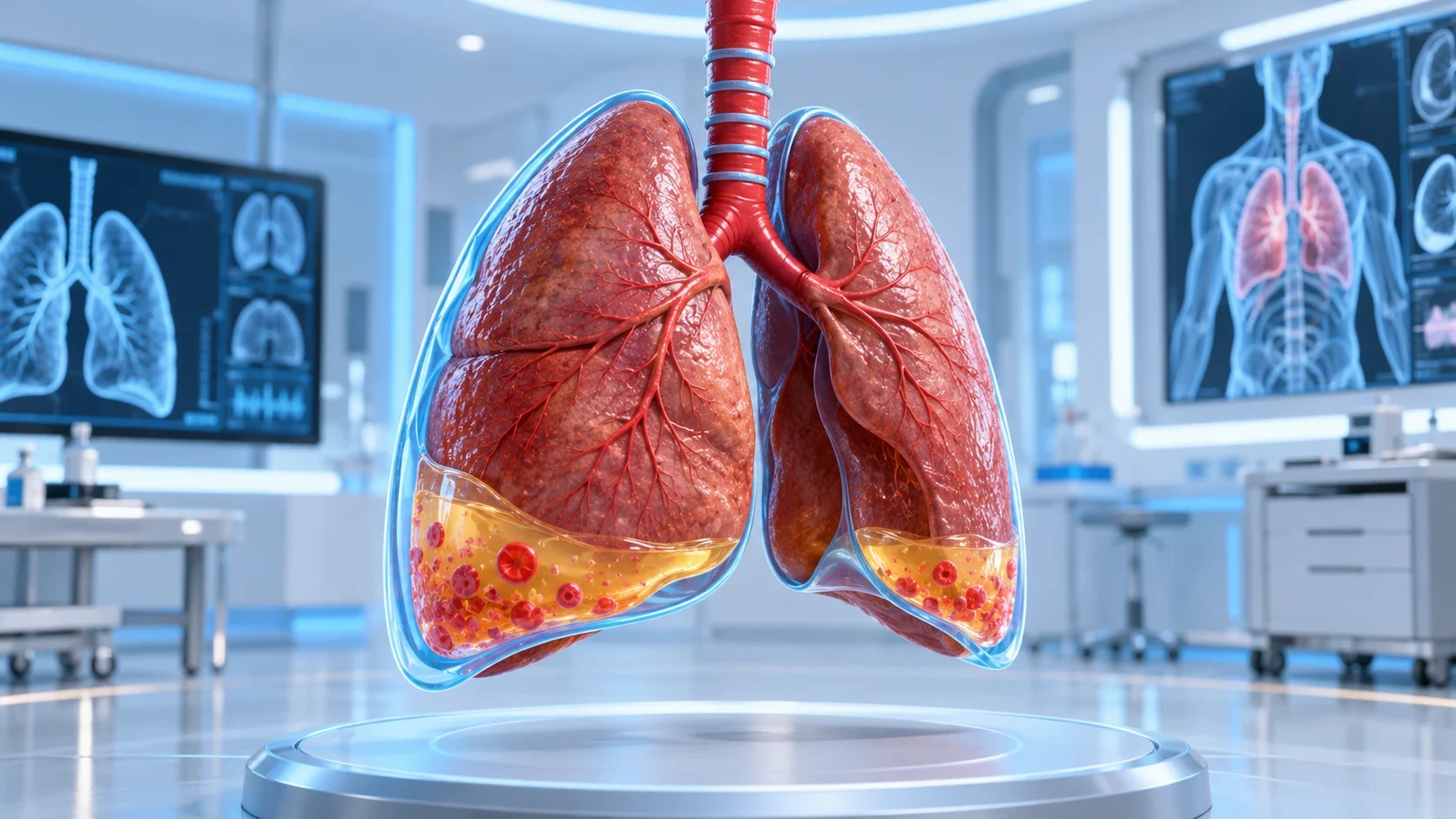
- Pleural effusion with no clear cause
Diagnostic investigations
Your evaluation is tailored to your symptoms and history. It may include:
- CT scan of the chest and PET-CT for staging
- Flexible bronchoscopy with endobronchial biopsy
- EBUS-TBNA for lymph node sampling and staging
- Pleural fluid analysis or thoracoscopic pleural biopsy
- Molecular testing of tissue to guide targeted therapy
Available treatment approaches
- Treatment is planned by a multidisciplinary oncology team and may include surgery, radiotherapy, chemotherapy, targeted therapy or immunotherapy
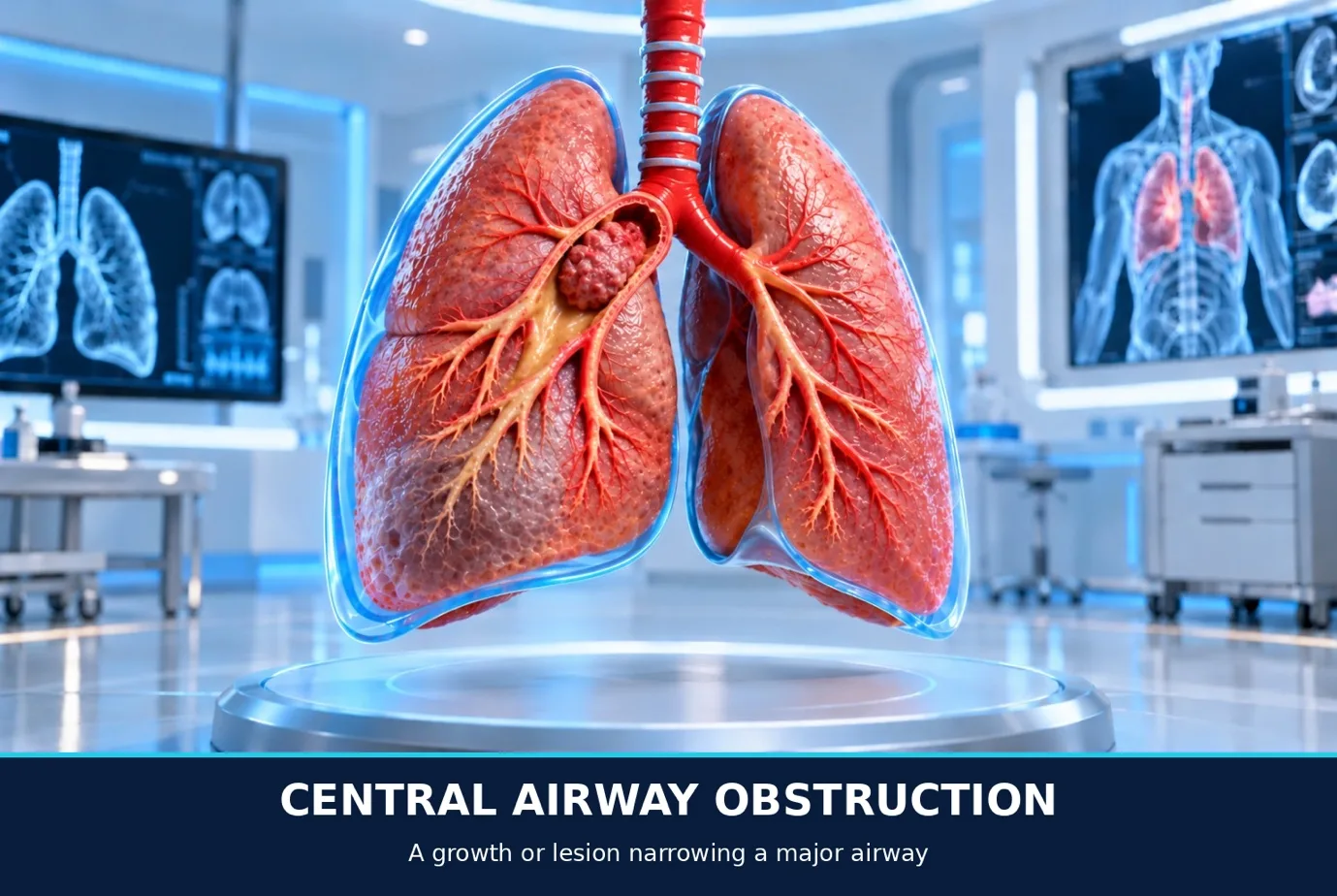
- Interventional procedures to relieve airway obstruction (debulking, stenting) in selected patients
- Management of malignant pleural effusion (drainage, pleurodesis)
- Supportive and palliative care for symptom relief
Treatment is individualised. The options above are general information; your doctor will recommend what is appropriate for you after assessment. Outcomes vary from person to person.
Frequently asked questions
EBUS-TBNA uses a bronchoscope with an ultrasound probe to see and sample lymph nodes and masses next to the airways through a fine needle, without surgical incisions. It provides both diagnosis and staging information.
Dr. Agarwal focuses on diagnosis, staging and interventional pulmonary care, and works with oncology colleagues for cancer-directed treatment.