
Sleep Medicine
Better sleep starts with better breathing
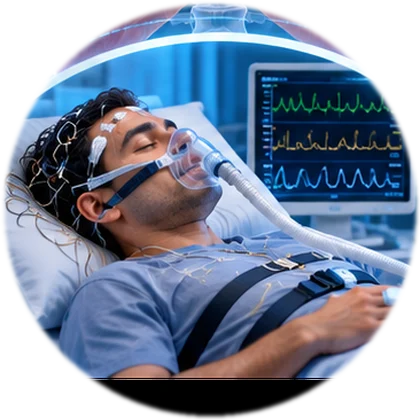
Sleep-related breathing disorders
Obstructive sleep apnea (OSA) occurs when the throat repeatedly narrows or closes during sleep, lowering oxygen levels and fragmenting sleep. Other conditions include obesity hypoventilation syndrome and breathing problems during sleep in people with COPD or neuromuscular disease.
Left untreated, these conditions are associated with high blood pressure, heart disease, stroke, diabetes and accidents due to sleepiness. A sleep study provides a definitive diagnosis and guides treatment such as CPAP.
Consider an evaluation if you have
- Loud, habitual snoring
- Witnessed pauses in breathing
- Excessive daytime sleepiness
- Morning headaches
- Hard-to-control blood pressure
- Poor concentration or memory
Tests & services
Polysomnography (Sleep Study)
An overnight study recording breathing, oxygen, brain activity and more during sleep.
CPAP / BiPAP Evaluation & Titration
Determining the correct pressure settings and mask for CPAP or BiPAP therapy.
Non-Invasive Ventilation (NIV) Assessment & Management
Breathing support through a mask — without a breathing tube — for people whose lungs or breathing muscles need help.
Frequently asked questions
Painless sensors are attached to record breathing, oxygen levels, heart rhythm, brain activity and movements while you sleep overnight. A technician monitors the study.
Not everyone who snores has sleep apnea. A study is advised when snoring is accompanied by breathing pauses, daytime sleepiness or related health conditions.
Most people adapt within a few weeks. Proper mask fitting, humidification and follow-up adjustments make a significant difference to comfort.
Depending on severity and anatomy, options include weight management, positional therapy, oral appliances and ENT surgery in selected patients.
Appointments
Breathe easier with expert, personalised lung care.
OPD at Anandam Hospital, Bhopal — Monday – Saturday, 9:00 AM – 5:00 PM. Call, WhatsApp or send an appointment request online.