What is TB?
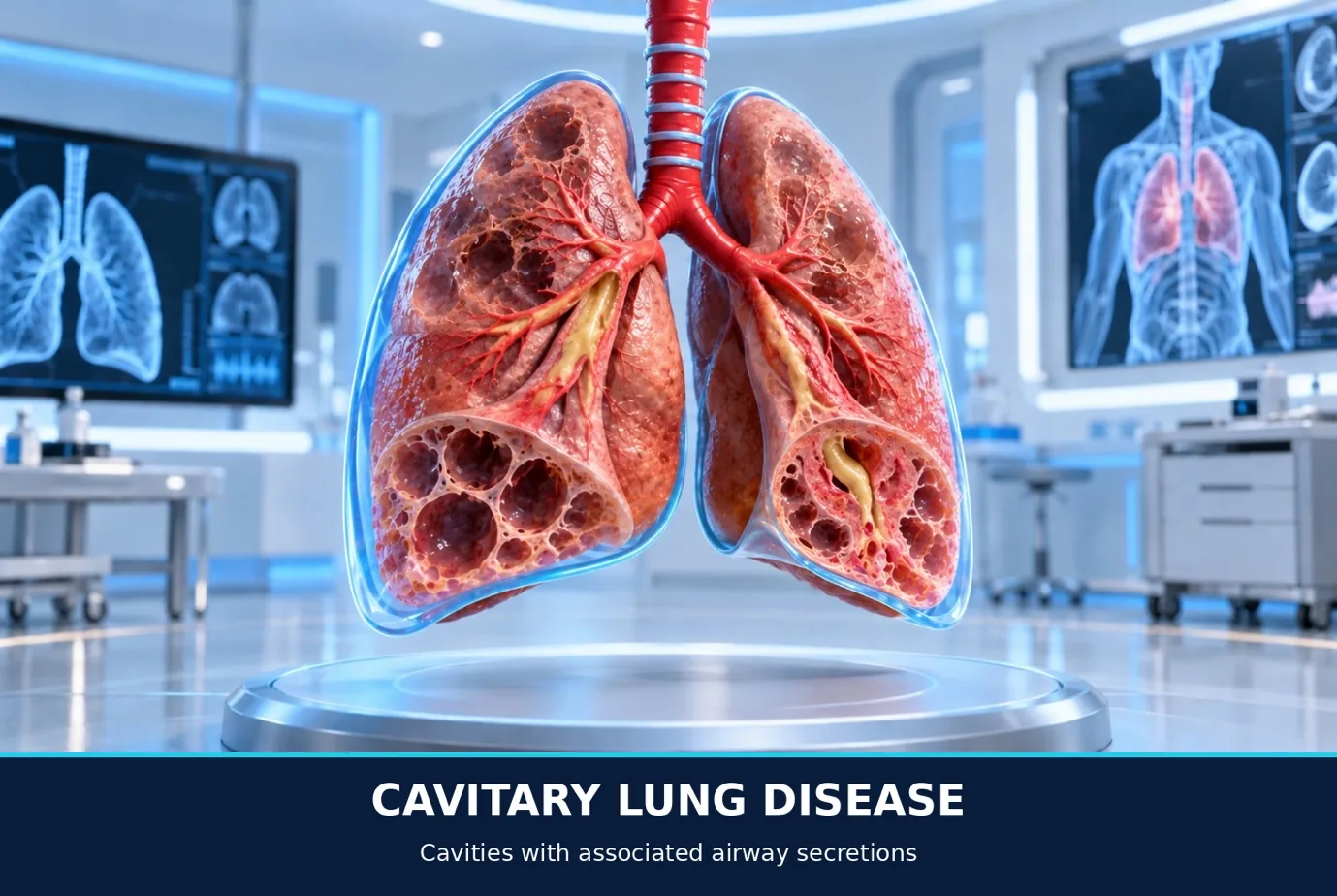
Tuberculosis (TB) is an infection caused by the bacterium Mycobacterium tuberculosis. It most commonly affects the lungs but can also involve the pleura (lining of the lungs), lymph nodes and other organs.
TB spreads through the air when a person with active lung TB coughs or sneezes. With an accurate diagnosis and a full course of treatment, TB is curable. India's National TB Elimination Programme provides free diagnostics and treatment.
Common symptoms
- Cough lasting more than two weeks
- Fever, often in the evening
- Night sweats
- Unintentional weight loss and loss of appetite
- Coughing up blood
- Chest pain or breathlessness (particularly with pleural TB)
Possible causes & risk factors
- Close contact with a person who has active pulmonary TB
- Weakened immunity — for example diabetes, HIV, malnutrition or immunosuppressive medicines
- Smoking and alcohol use
- Crowded or poorly ventilated living conditions
When should you consult a pulmonologist?
- A cough lasting more than two weeks, especially with fever or weight loss
- Sputum tests are negative but TB is still suspected
- You have fluid around the lung (pleural effusion)
- Symptoms persist or side-effects occur during TB treatment
Diagnostic investigations
Your evaluation is tailored to your symptoms and history. It may include:
- Sputum microscopy and molecular tests (such as CBNAAT/TrueNat)
- Chest X-ray and CT scan when required
- Bronchoscopy with bronchoalveolar lavage when sputum is unavailable or negative
- EBUS-TBNA for enlarged mediastinal lymph nodes
- Pleural fluid analysis and pleural biopsy for pleural TB
Available treatment approaches
- A standard multi-drug course of anti-tuberculosis treatment, usually for at least six months
- Drug-susceptibility testing and specialised regimens for drug-resistant TB
- Monitoring for side-effects and adherence support
- Nutritional support and management of diabetes or other conditions
- Drainage of pleural fluid where needed
- Coordination with the National TB Elimination Programme
Treatment is individualised. The options above are general information; your doctor will recommend what is appropriate for you after assessment. Outcomes vary from person to person.
Frequently asked questions
Yes. Drug-sensitive TB is curable in the large majority of patients who complete the full course of treatment. Stopping early increases the risk of relapse and drug resistance.
Pulmonary TB can spread through the air. Most patients become much less infectious within a few weeks of starting effective treatment. Extra-pulmonary TB, such as pleural TB, is generally not contagious.
If you cannot produce sputum or sputum tests are negative, bronchoscopy allows samples to be collected directly from the affected part of the lung for testing.