
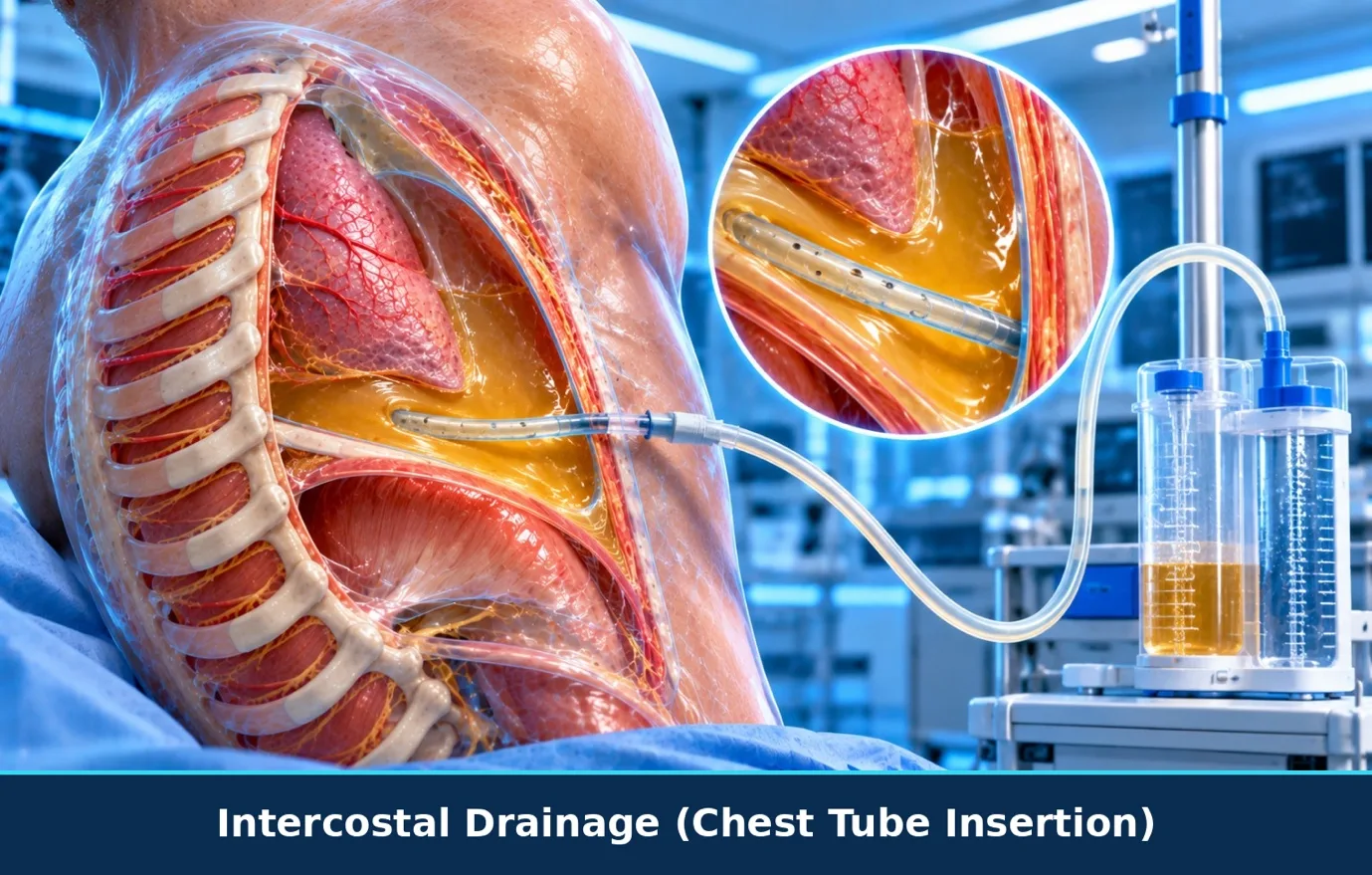
What is Intercostal Drainage (ICD)?
An intercostal drain (chest tube) is a flexible tube inserted through the chest wall between the ribs into the pleural space. It is connected to an underwater seal or valve system to allow air, fluid, blood or pus to drain and the lung to re-expand.
Why it is done
- Pneumothorax
- Empyema or infected pleural fluid
- Large or recurrent pleural effusions
- Haemothorax
Before the procedure
- Inform the team about blood thinners and allergies
- Blood tests (including clotting profile) may be checked
- An ultrasound of the chest will be performed to locate the fluid or air safely
- You can usually eat lightly unless sedation is planned
During the procedure
- Local anaesthetic is infiltrated; sedation or pain relief may be given
- The tube is inserted, secured with stitches and connected to a drainage system
After the procedure
- Regular monitoring of drainage and chest X-rays
- Breathing exercises and pain relief
- The drain is removed once the air leak or fluid has resolved
Safety & risks
Pleural procedures are performed with ultrasound guidance and local anaesthesia to improve safety. Possible risks include pain, bleeding, infection, pneumothorax and, rarely, re-expansion pulmonary oedema after large-volume drainage. These will be discussed with you before the procedure.
Preparation instructions may differ for individual patients — please follow the specific advice given at your consultation.