
What is Polysomnography (Sleep Study)?
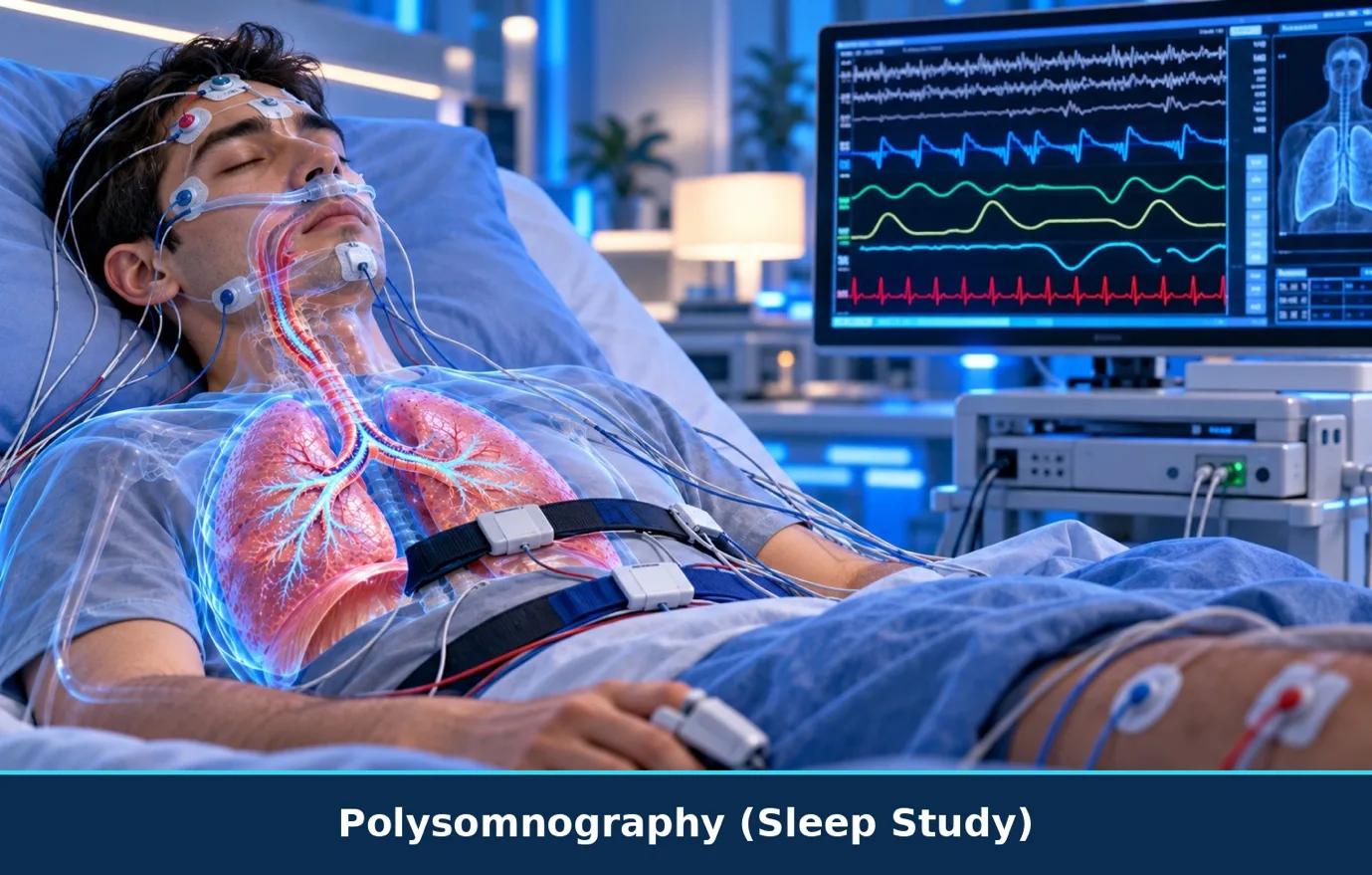
Polysomnography (PSG) is a comprehensive overnight sleep study. Sensors record brain waves, eye movements, muscle activity, heart rhythm, breathing effort, airflow, oxygen saturation, snoring and body position. It is the reference test for diagnosing obstructive sleep apnea and other sleep disorders.
Why it is done
- Loud snoring with pauses in breathing
- Excessive daytime sleepiness
- Suspected sleep apnea with heart disease or uncontrolled blood pressure
- Evaluation of other sleep disorders
Before the procedure
- Avoid caffeine and alcohol on the day of the study
- Avoid daytime naps
- Bring comfortable night clothes and your usual medicines
- Wash and dry your hair; avoid oils or gels
During the procedure
- Sensors are attached to your scalp, face, chest, legs and finger — they are not painful
- You sleep in a private room while data are recorded through the night
- A technician monitors the study
After the procedure
- Sensors are removed in the morning and you can go home
- Results are analysed and discussed at your follow-up
Safety & risks
Polysomnography is non-invasive and safe. Some people experience minor skin irritation from sensor adhesive.
Preparation instructions may differ for individual patients — please follow the specific advice given at your consultation.